
A walking pad can sound perfectly reasonable in your apartment while still creating a noticeable rhythm in the room below.
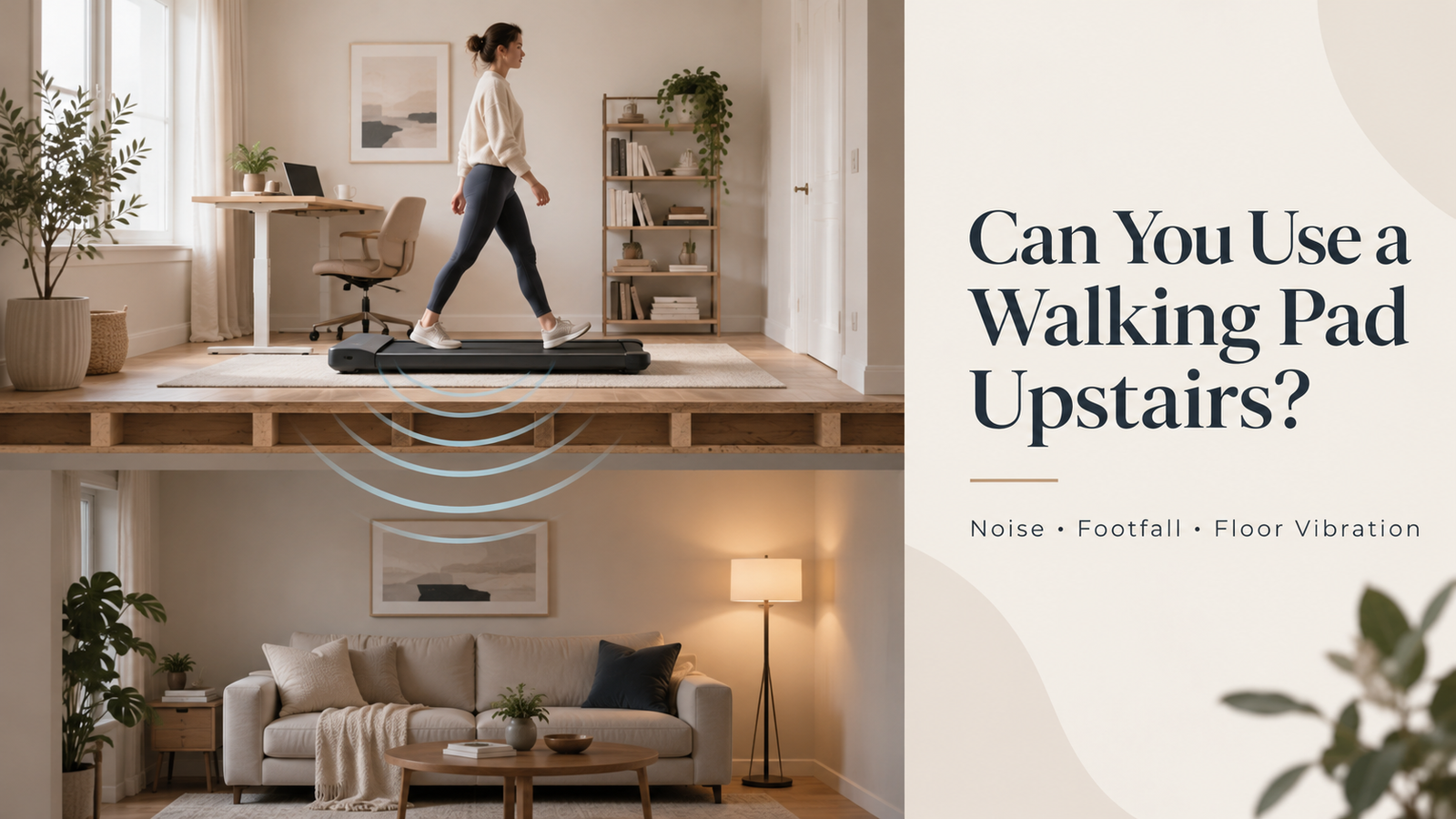
That happens because upstairs use involves more than the motor. Footsteps load the deck repeatedly, and some of that vibration can travel into the floor and through the building structure. Flooring, walking speed, footwear, machine condition, and the building itself all influence the result.
So yes, a walking pad can work in an upstairs apartment, but the setup deserves more attention than a simple “quiet motor” claim suggests.
About this guide: We have not measured walking-pad noise in apartments ourselves. This article combines manufacturer guidance with published building-acoustics information and TQE editorial analysis of flooring, mats, placement, speed, and maintenance.
The Quick Answer
For an upstairs apartment, start with a stable walking pad at the lowest practical speed for your routine, positioned on a dense equipment mat that fully supports the machine.
Hard flooring can provide a stable base but may transmit vibration directly into the floor structure. Carpet may soften some sound in the room, although thick or heavily padded carpet can introduce stability, clearance, and airflow problems.
A treadmill mat can reduce some vibration and protect the floor, but it cannot guarantee that the apartment below will be silent. UREVO’s current mat guidance also notes that final noise depends on factors such as the machine, speed, footwear, flooring, and building construction.
Before changing the setup, identify what you actually notice.
| What you notice | First place to look |
|---|---|
| Steady hum beside the machine | Motor / belt noise |
| Repetitive thump while walking | Footfall |
| Floor or nearby furniture buzzing | Vibration / mechanical coupling |
| Machine becomes louder over time | Maintenance / alignment |
| Reasonably quiet upstairs but obvious downstairs | Structure-borne vibration |
That last situation is the most relevant one for an upstairs apartment.
Why Upstairs Noise Behaves Differently
Building-acoustics guidance from NIST describes structure-borne noise as vibration entering a floor, wall, or other building element through direct mechanical contact. That vibration can then travel through the structure and become audible somewhere else.
A walking pad creates several possible paths.
The motor and rollers generate mechanical vibration. Each step adds repeated loading to the deck, and the feet or frame of the machine transfer some of that energy into the surface underneath.
UREVO’s apartment-noise guidance similarly separates motor sound from footstep impact and floor vibration. For someone living below the machine, those impact-related paths can matter as much as the sound the user hears in the room itself.
This explains why the upstairs and downstairs experiences can differ even when the same machine is involved.
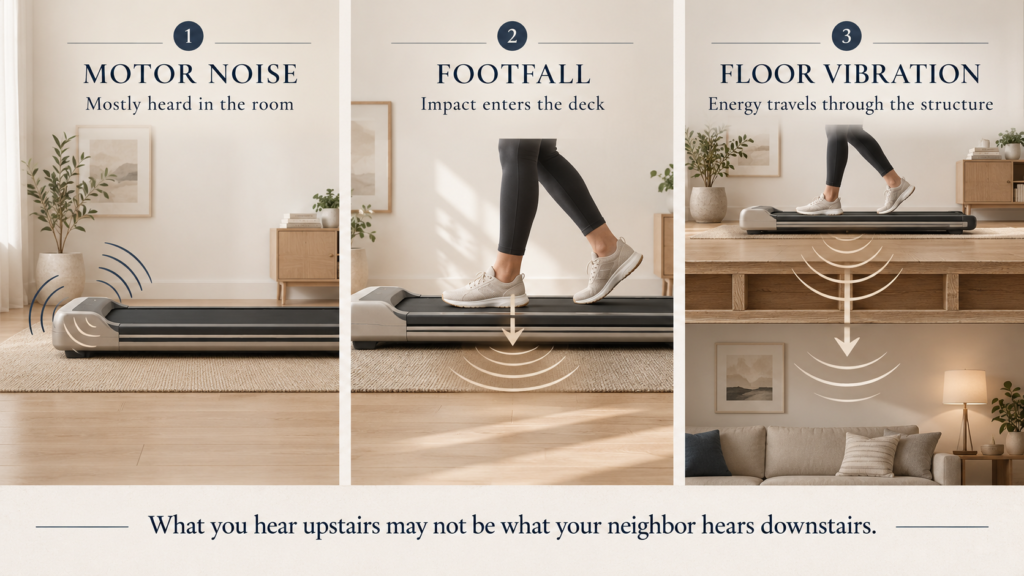
Three Noise Paths Matter More Than One dB Number
A published dB figure can still help when comparing machine-side noise, but it tells only part of the apartment story.
Motor and Belt Noise
This is the sound you are most likely to notice beside the machine.
WalkingPad notes that noise varies with factors including model, speed, user weight, flooring, and maintenance condition. Manufacturer noise claims can therefore help describe the machine itself, but they do not predict how much vibration will reach another apartment.
Related reading
If you are still choosing the machine, our apartment-focused guide compares published noise claims, cushioning, machine weight, and floor-vibration considerations.
5 Best Quiet Walking Pads for Apartments in 2026
Footfall
Each step adds impact to the moving deck.
UREVO identifies footsteps as one source of apartment noise and also notes that walking speed and footwear can affect what the machine sounds like in use. In our editorial view, this is one reason an empty walking pad demonstration is a poor substitute for evaluating the machine with an actual person on it.
A quiet motor still leaves the impact of walking to consider.
Structure-Borne Vibration
This is where upstairs use becomes especially building-dependent.
When the machine transfers vibration directly into the floor, the structure itself becomes part of the transmission path. Different floor assemblies, joists, slabs, coverings, and room layouts can produce very different results from the same walking pad.
That variability is why no single motor-noise number can predict the experience downstairs.
What a Mat Can Actually Do Upstairs
A treadmill mat adds another material layer between the machine and the floor.
WalkingPad and UREVO both describe equipment mats as useful for reducing some vibration, improving stability, and protecting flooring. For upstairs use, those functions are more relevant than simply making the machine look more “gym ready.”
The mat should support every foot, wheel, and frame contact point while staying flat and stable during use.
A useful upstairs mat should also resist excessive compression. Very soft foam can make the machine less stable, especially if the floor underneath is already soft.
A treadmill mat can help with vibration, but it should not be treated as complete soundproofing.
Related reading
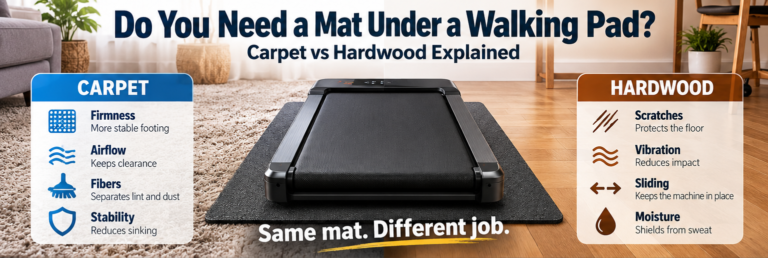
Mat size and material affect more than floor protection. Our guide compares carpet and hardwood setups and explains why the full machine footprint matters.
Do You Need a Mat Under a Walking Pad? Carpet vs Hardwood Explained
The Floor Under the Mat Still Matters
The same mat can behave differently depending on the surface underneath it.
| Floor setup | Main thing to check | Role of the mat |
|---|---|---|
| Hardwood / laminate | Vibration transfer and movement | Isolation + floor protection |
| Tile | Stability and transmitted vibration | Isolation + grip |
| Low-pile carpet | Stability, fibers, clearance | Firmer interface |
| Plush / thick carpet | Sinking, airflow, rocking | Flexible mat may not be enough |
| Concrete-based floor | Machine and footfall vibration | Additional isolation may still help |
This is an editorial setup matrix rather than an acoustic measurement of each floor type.
Hardwood and Laminate
Hard flooring usually gives the walking pad a firm, level base. It can also create a direct mechanical path between the machine and floor structure.
A dense equipment mat can therefore protect the finished surface while adding some separation between the walking pad and the floor.
Carpet
Carpet may soften some sound within the room, but thicker carpet creates a different set of issues.
The machine or mat can sink unevenly, and low-profile walking pads may have less clearance around the underside. Stability and airflow should therefore be checked before treating carpet as a noise-control solution.
If the room is carpeted, our walking pad on carpet guide looks more closely at pile height, ventilation, stability, and when a firm mat may still be insufficient.
Speed Is One of the Easiest Variables to Test
WalkingPad and UREVO both indicate that speed can affect overall noise.
For upstairs use, the most useful approach is to begin near the low end of the machine’s range and increase gradually while paying attention to floor vibration, nearby rattles, and footfall.
The exact number matters less than how the setup behaves at the pace you actually intend to use.
For this reason, the slow end of the speed range is often more useful for an upstairs-apartment decision than the advertised maximum speed.
Footwear Can Affect the Result
UREVO includes footwear among the factors that can influence walking-pad noise.
Hard soles create a different contact with the deck than softer athletic shoes, so it makes sense to evaluate the setup with the footwear you normally expect to use.
This is an editorial consideration rather than a claim that one shoe type will universally solve apartment noise. Flooring, machine design, gait, and building construction remain part of the same setup.
Placement Within the Room Can Matter
WalkingPad’s apartment guidance recommends avoiding shared walls where practical, and room placement can also influence secondary rattles and mechanical contact.
Keep the walking pad and mat clear of objects that can vibrate against the machine, including:
- walls
- desks
- shelving
- cabinets
- radiators
- other furniture
The machine should sit independently on a stable surface with enough clearance that nothing else becomes an unintended vibration path.
If moving the machine to another part of the room noticeably changes what you feel through the floor or hear from nearby furniture, that can help identify whether placement is contributing to the problem.
A Phone dB App Cannot Tell You What the Downstairs Neighbor Hears
A phone beside the walking pad mainly captures airborne sound at that location.
Structure-borne vibration can travel through the building and become audible somewhere else, so a same-room phone reading does not establish what is happening in the apartment below.
If you have legitimate access to the lower floor, the most useful practical test is simple: have someone listen downstairs while you walk normally upstairs.
That may not be realistic in every apartment building, but it is more informative than treating one same-room dB reading as proof of downstairs silence.
A Better Upstairs Setup Test
Instead of trying to predict the building from a specification sheet, test the variables you can control.
1. Check the Machine Before Walking
Place the walking pad on a level surface with every support point fully on the mat.
Make sure the mat is flat and the machine does not rock, sink, or contact nearby furniture.
2. Run It Empty at Low Speed
Listen for mechanical rattles, belt rubbing, or unusual vibration.
This gives you a baseline for the machine before footfall is added.
3. Walk at the Lowest Practical Pace
Use the footwear you would normally wear and pay attention to vibration through the floor as well as the sound in the room.
If nearby objects begin rattling, adjust the setup before increasing speed.
4. Increase Speed Gradually
Move toward your normal walking pace in small steps.
You are looking for a comfortable operating range where the machine remains stable and the floor response stays reasonable.
5. Recheck the Setup Over Time
Mats can shift, carpet can compress, and walking-pad belts can drift.
If the sound or vibration changes noticeably after several sessions, inspect the machine and floor setup again rather than assuming the original setup is still behaving the same way.
Maintenance Matters When the Noise Changes
A walking pad that has always produced the same soft mechanical sound is different from one that suddenly begins squeaking, scraping, knocking, or vibrating more strongly.
WalkingPad’s current maintenance guidance lists dry belts, misalignment, loose components, uneven flooring, debris, worn hardware, and motor-related issues among possible causes of changing noise.
That makes maintenance worth checking before adding another layer beneath the machine.
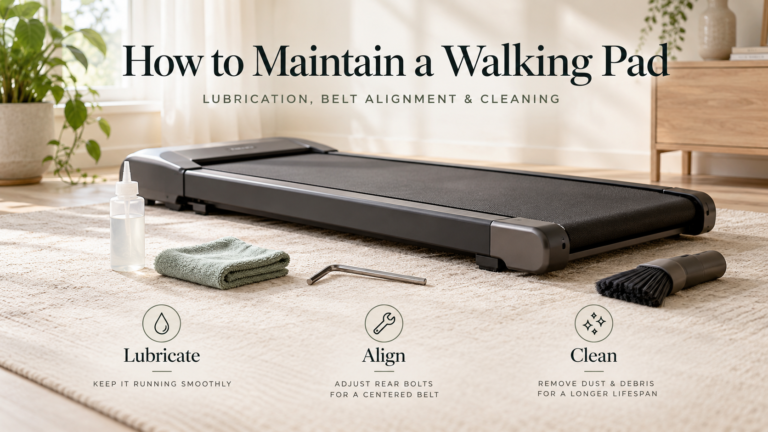
Our walking pad maintenance guide covers lubrication, belt alignment, cleaning, and the symptoms that warrant manufacturer support.
What About Small Apartments Where You Move It Every Day?
An upstairs setup may work acoustically and still become annoying to live with.
A walking pad, dense mat, standing desk, and storage routine can all compete for the same limited floor area. Foldable mats can reduce some of that friction, but they still need a realistic storage location.
UREVO’s current foldable mat, for example, measures 63 × 26 inches when open and approximately 15.8 × 12.8 × 2 inches when folded.
That difference matters if the entire setup gets put away every evening.
If storage space is already one of your main constraints, our best walking pads for small apartments guide compares in-use footprint, stored dimensions, and daily portability.
When the Better Answer Is Another Room
There are limits to what setup tweaks can accomplish.
If repetitive floor vibration remains obvious after checking stability, mat placement, walking speed, maintenance, and nearby furniture, the building structure may be the dominant variable.
In that situation, a ground-floor room, concrete-supported area, gym, or another part of the home may provide a more forgiving location.
Apartment leases and building policies can also set their own rules for exercise equipment, quiet hours, or nuisance noise. Those rules should be checked before investing in additional accessories.
So, Can You Use a Walking Pad Upstairs?
For many apartments, yes, provided the machine is stable, the floor setup is suitable, and the walking speed and vibration are manageable.
The most useful sequence is straightforward: place the machine on a stable mat, test it first at low speed, listen for rattles or impact, increase speed gradually, and recheck the setup if the sound changes over time.
If the machine remains clearly noticeable downstairs after those checks, the next move may be changing location rather than chasing a quieter motor specification.
Frequently Asked Questions
Do I Need Permission From My Landlord or Building Management?
That depends on the lease and building rules.
Some buildings regulate exercise equipment, floor coverings, quiet hours, or nuisance noise. If the rules are unclear, checking before setting up the machine is safer than assuming that compact equipment is automatically permitted.
Can I Put a Walking Pad on a Rug or Carpet Tile Instead of a Treadmill Mat?
A rug or carpet tile may protect the floor, but it may not provide the same stability or compression resistance as a dense equipment mat.
Check whether the walking pad stays level, whether all support points remain firmly supported, and whether the material interferes with clearance or airflow.
Is a Concrete Floor Automatically Better for Upstairs Use?
Concrete can reduce some of the flex associated with lighter floor structures, but it does not eliminate motor sound, footfall, or vibration.
The actual construction of the building and the floor assembly still matter.
What Should I Do if the Walking Pad Suddenly Gets Louder?
Check for debris, belt drift, loose exterior parts, mat movement, and floor instability first.
If the change includes grinding, burning odors, electrical problems, repeated stalling, or unstable belt movement, stop using the machine and contact the manufacturer.